Guide
What fabric weight does to a night
The label on a set tells you what it is made of. It does not tell you the thing you actually need, which is the room temperature the set was designed for. Here is how to translate one into the other.
Published 7 September 2026 · 14 minute read · sources read 7 September 2026
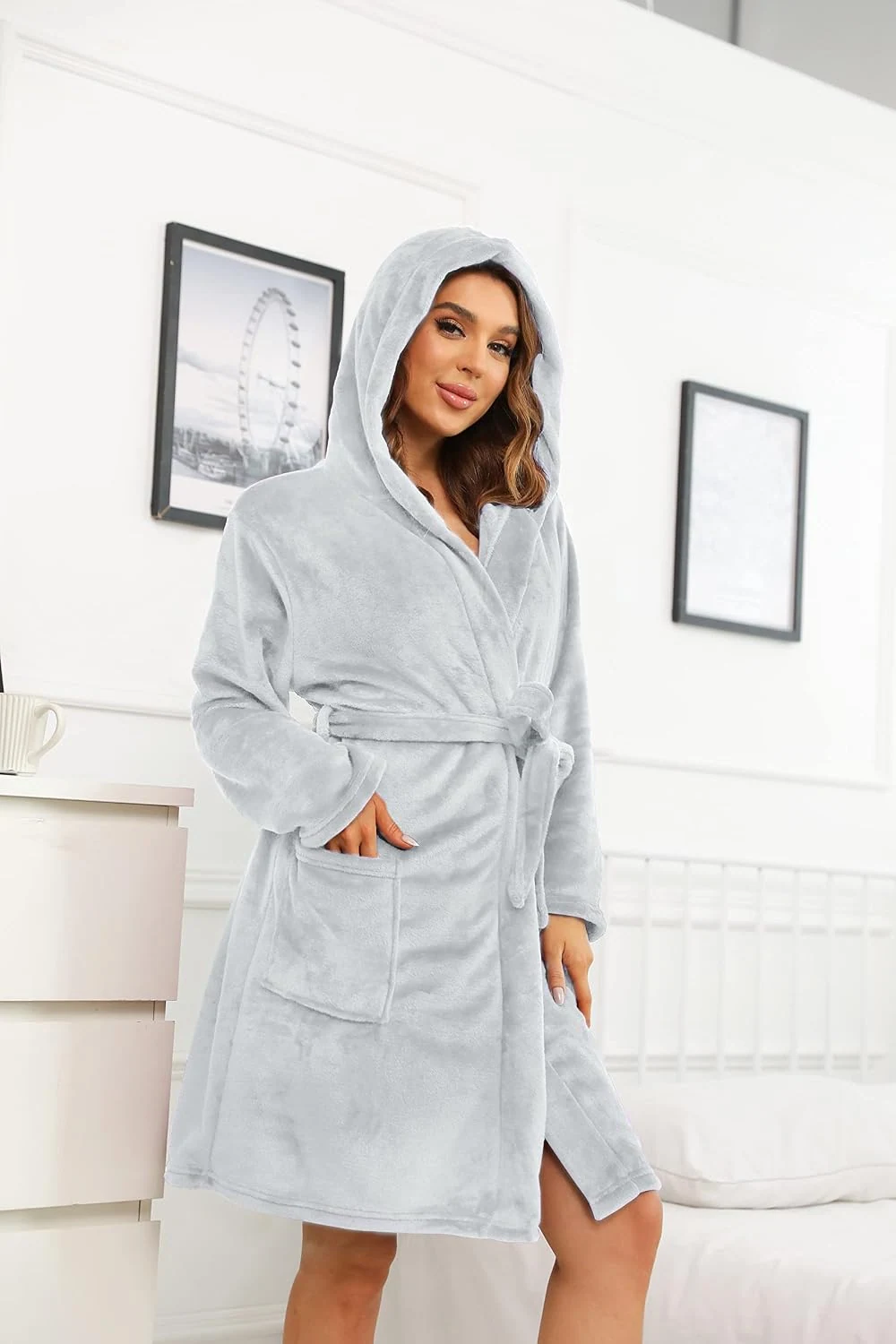
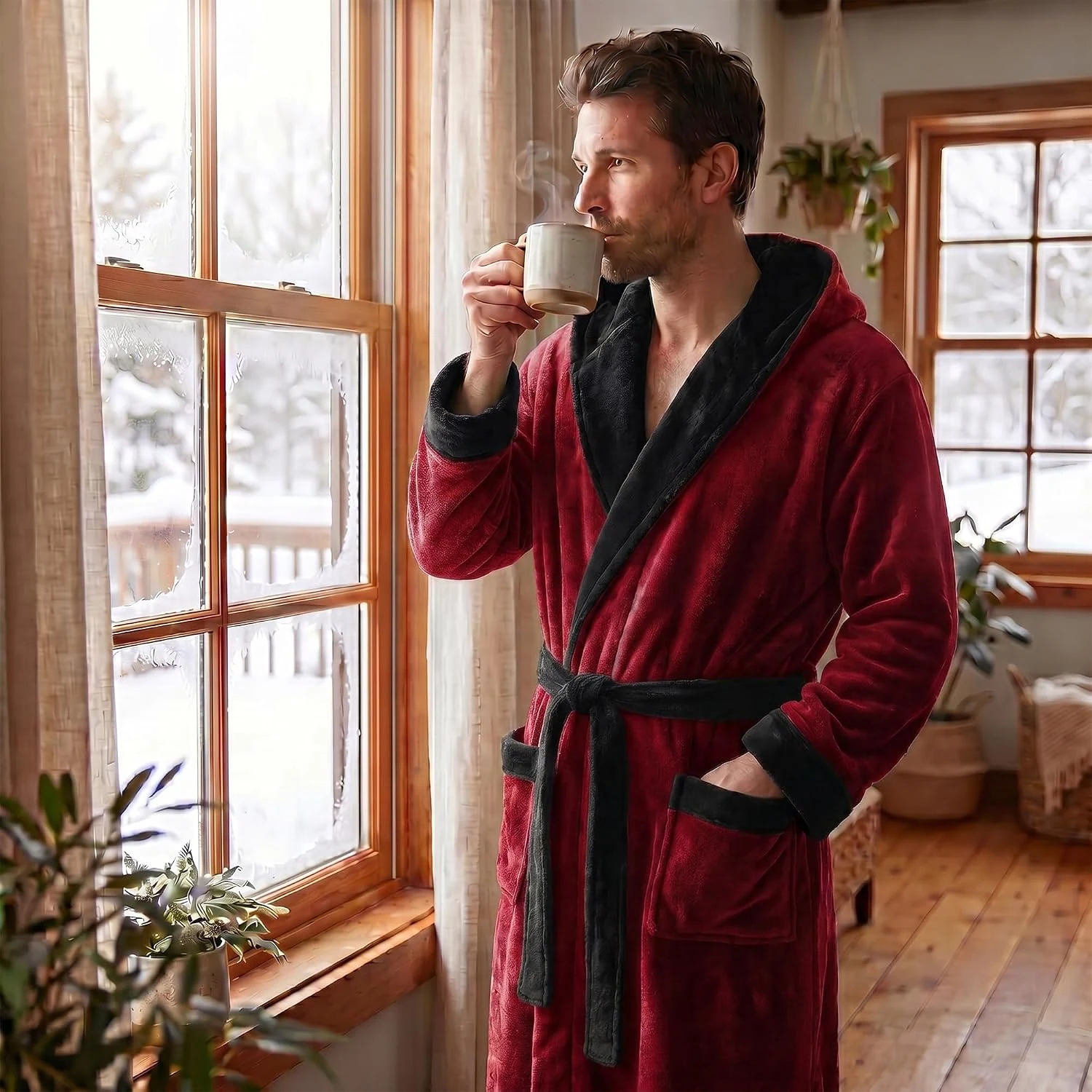
Start with the piece
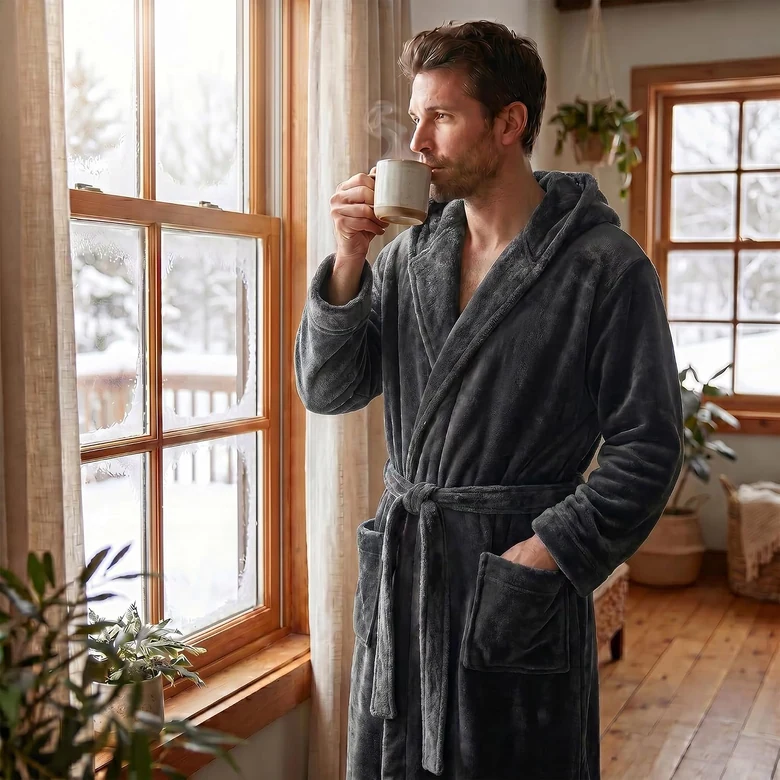






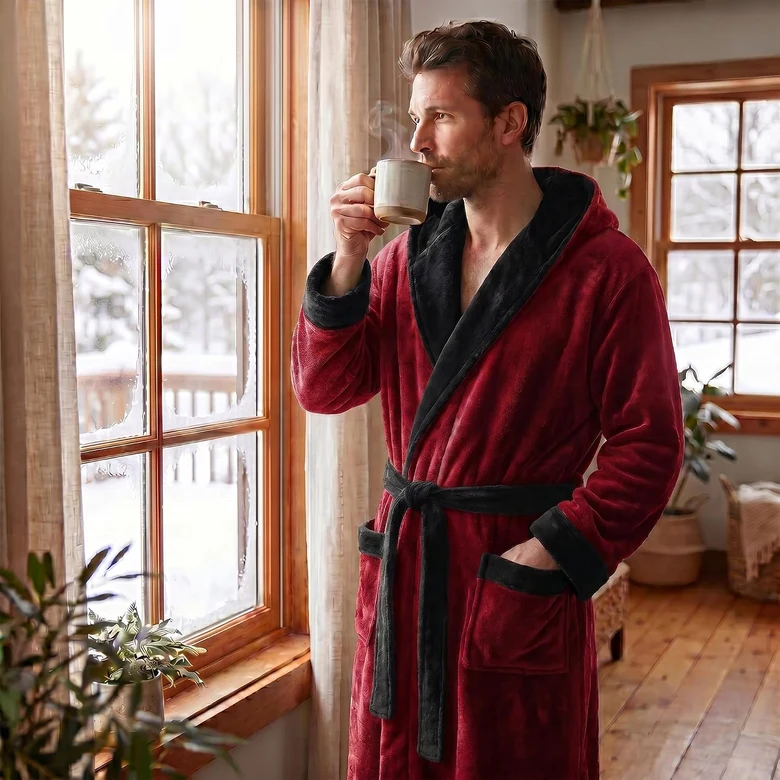
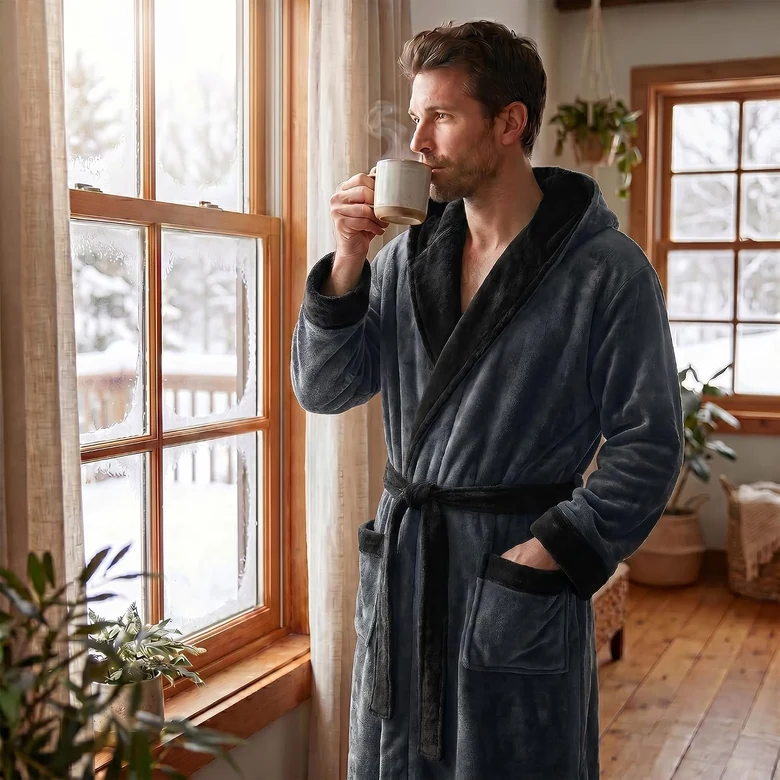
Men's Fleece Hooded Robe, Dark Grey / Black
fleece
4.6 out of 5 · 20,688 ratings
Size L/XL only in this colour
$26.72
The question behind every return
Ask anyone who has returned sleepwear why, and the answer is almost never the size. It is that the set was too warm, or not warm enough, and both of those were decided by the fabric before the size was ever chosen.
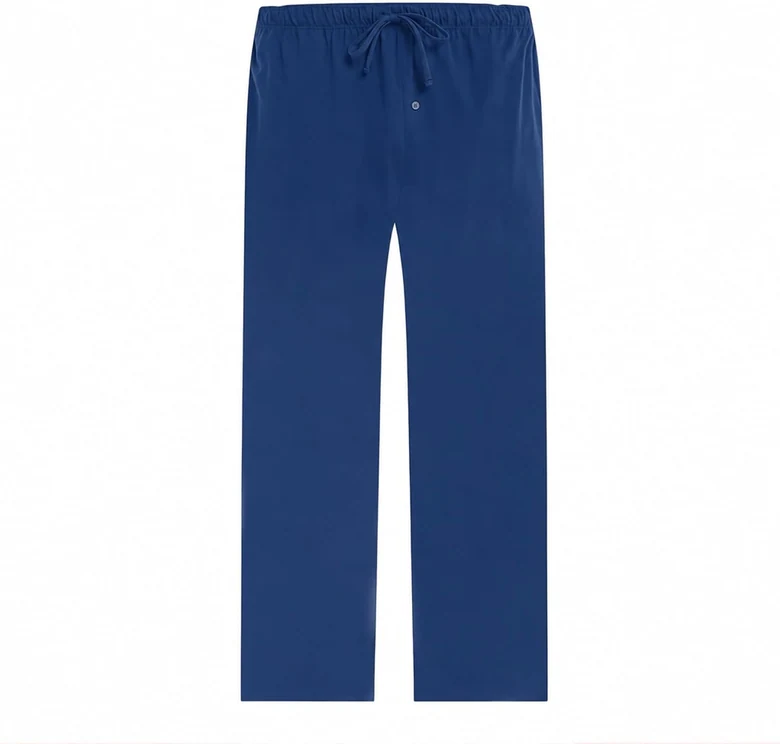
This is the one category where the fabric name on the card is more useful than the picture. A navy button-front set in cotton and the same set in fleece look nearly identical on a white background and produce opposite nights. The card names the fabric first for that reason.
The catalogue splits into five fabric families across 573 pages, and each family answers a different room.
Four fabrics, four temperatures
The ranges below are not laboratory numbers and nobody should treat them as such. They are the bands the reviews keep pointing at, ours and everyone else's, and they line up with what the fibres physically do.
| Fabric | Pages with a price | Room it suits | What it does |
|---|---|---|---|
| Cotton, woven | 126 | 68 to 76 °F | breathes, creases, cools as it dries |
| Knit | 81 | 66 to 74 °F | light, stretches, sits close without gripping |
| Satin | 18 | 70 to 78 °F | cool to the touch, slides instead of clinging |
| Flannel | 8 | 60 to 68 °F | brushed both sides, warm without bulk |
| Fleece | 215 | under 64 °F | traps heat and keeps it, adds bulk everywhere |
Two degrees matter more here than they do anywhere else in clothing. A bedroom at seventy is a cotton room. The same bedroom at sixty-four is a flannel room. Nobody notices the difference during the day and everybody notices it at three in the morning.
Why cotton is the default and not the answer
Cotton is the default for a reason: it breathes, it washes cleanly, it does not hold smells, and it costs less to make than anything else that does those three things. 36 of the pyjama sets here are all cotton, and if you do not know your room temperature, that is the safe first purchase.
What cotton does badly is wet. It holds moisture instead of moving it, and a cotton top that has absorbed sweat at two in the morning cools you down for the next hour whether you want that or not. In a warm room that is pleasant. In a cold one it is why people wake up.
The crease
Woven cotton creases and there is nothing to be done about it. A cotton set folded in a drawer for a fortnight comes out with lines across the front, and they hang out in about an hour. Every review that calls a cotton set wrinkled is describing the fibre, not the finish.
From the bench

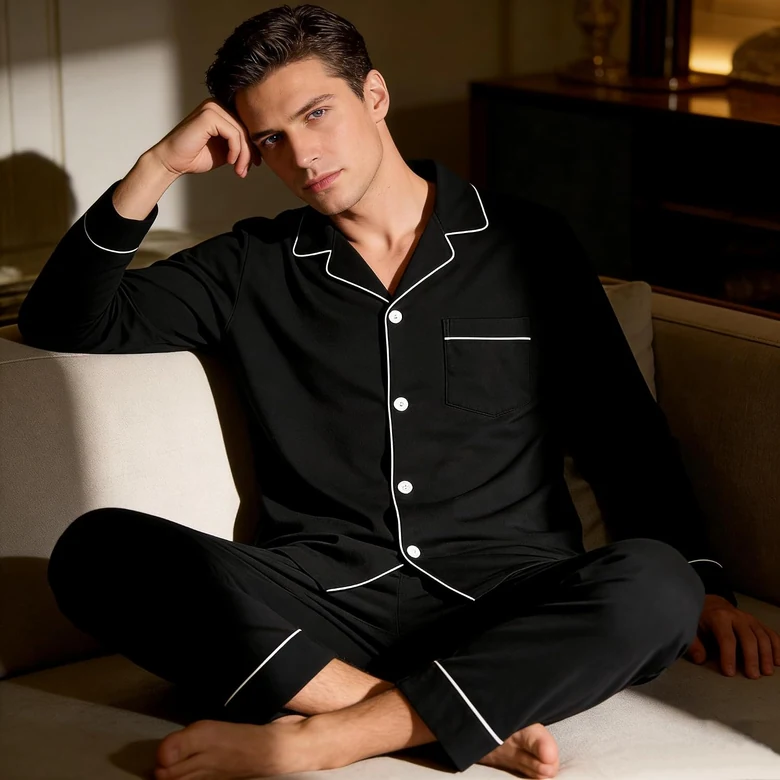
Men's Cotton Pajama Set, Navy
cotton · buttons
4.3 out of 5 · 2,352 ratings





Size L only in this colour
$26.98
What fleece actually does
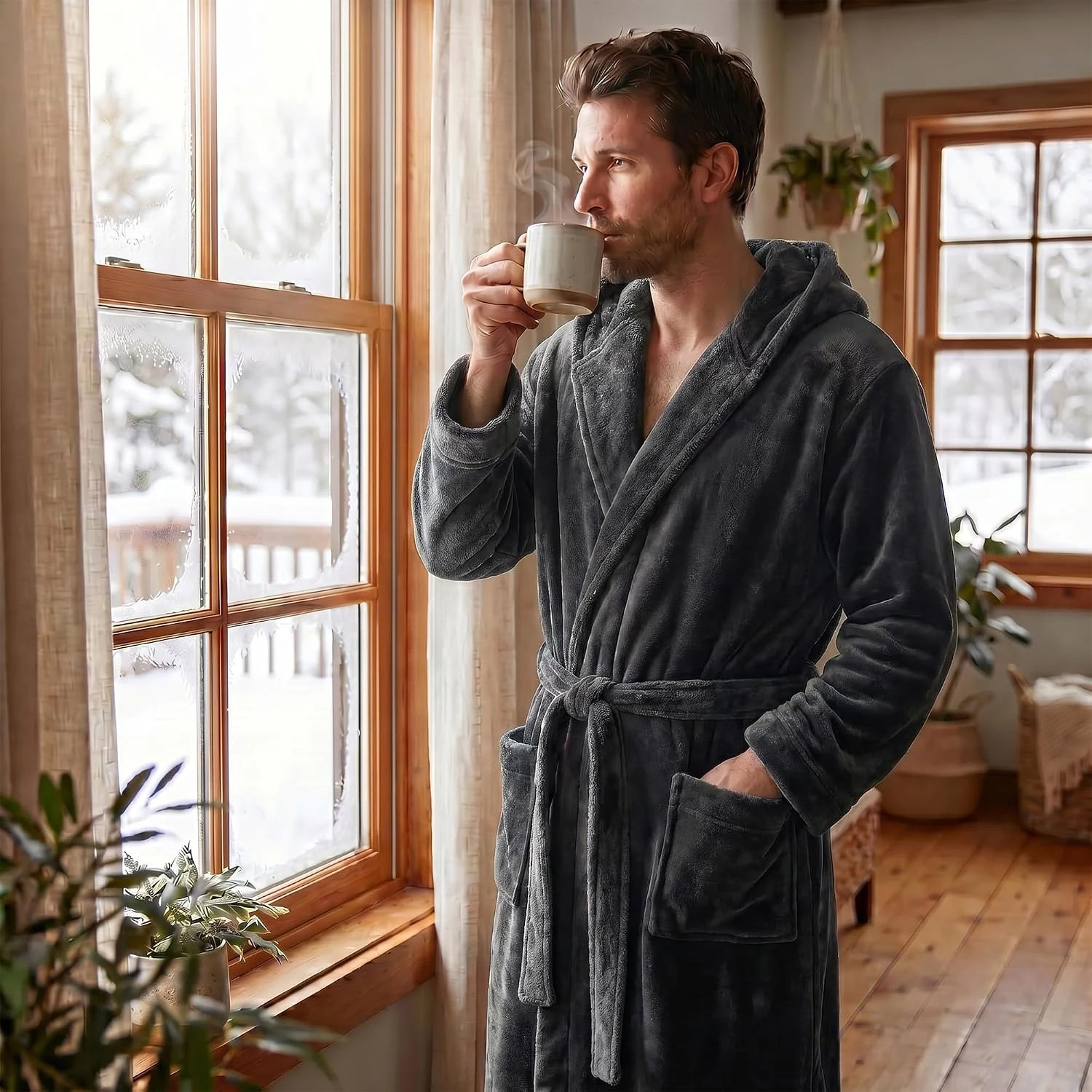
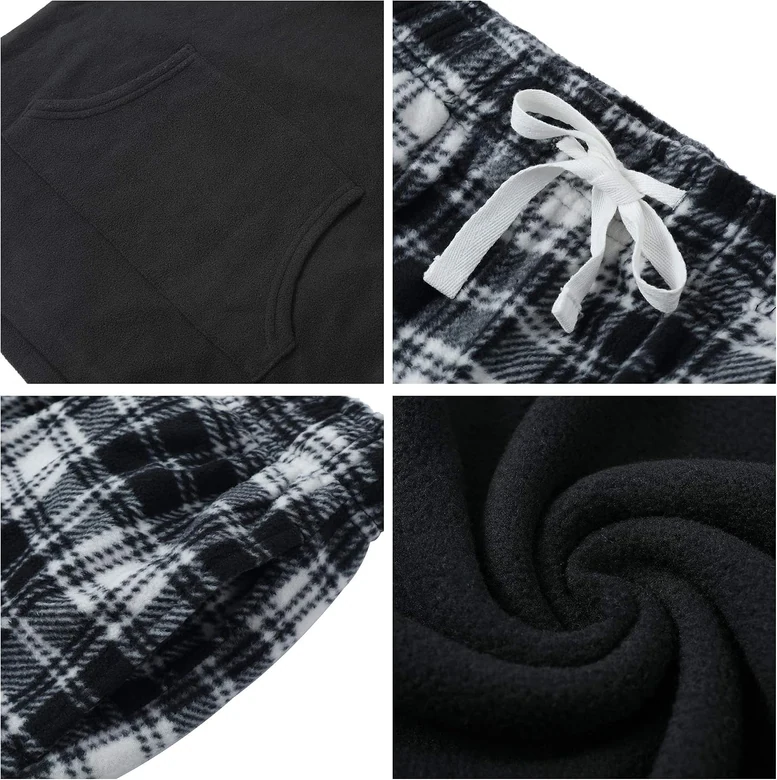
Fleece is polyester knitted and then brushed until it holds air. The air is what makes it warm. The polyester is what makes it dry fast and pill eventually. 215 pages here are fleece, and they are the warmest things on the site by a wide margin.
Fleece has three honest drawbacks and it is worth knowing them before ordering rather than after. It adds bulk exactly where a waistband sits. It sheds a little in the first two washes, which shows up on darker sheets. And the pile mats at the cuff and the seat over a season or two, so a fleece piece looks older than a cotton one of the same age even when it has more wear left.
What it does in exchange is hold heat in a cold house better than any amount of layering with lighter fabrics. In a bedroom under sixty-four degrees, nothing else on this site comes close.
Knit, satin and the middle ground
Between the two extremes there are the fabrics people underestimate. Knit is the workhorse: 81 pages, light, stretchy, and the only family that behaves the same on a top and a bottom. Satin is cooler to the touch than any of them for the first ten minutes and then behaves like a light knit, and 18 pages of it exist for warm rooms and none of it appears on the onesie shelf.
Flannel deserves more attention than it gets in this catalogue, where only 8 pages carry it. It is woven cotton brushed on both faces, so it traps a little air without the bulk of fleece, and it lands almost exactly in the gap between the two: warmer than cotton, lighter than fleece, and it breathes where fleece does not.
The room decides, not the month
The public guidance on sleep says nothing about pyjamas and quite a lot about the room. Both of the health agencies we read make the same point in almost the same words:
Keep your bedroom quiet, cool, and dark (a dim night light is fine, if needed).
National Heart, Lung, and Blood Institute, Healthy sleep habits, read 7 September 2026
Keeping your bedroom quiet, relaxing, and at a cool temperature.
Centers for Disease Control and Prevention, About sleep, read 7 September 2026
Neither says what cool means in degrees, and neither should: a number that suits one household suits another badly. What both do is put the room first, which is exactly the order this site sorts by. Pick the shelf for the room you sleep in, then pick the size.
The practical consequence is that seasons are a poor guide. A bedroom over an unheated garage stays cold in July. A top-floor flat in a terraced row stays warm in January. The month on the calendar tells you almost nothing about either.
| Shelf | Pages with a price | How the weights split |
|---|---|---|
| Pajama Sets | 161 | both weights, split roughly evenly |
| Robes & Bathrobes | 139 | fleece for cold houses, knit for the rest |
| Pajama & Lounge Bottoms | 173 | both weights, split roughly evenly |
| Sleep Shorts | 38 | cotton and knit only |
| Onesies & Jumpsuits | 34 | fleece only, the warmest shelf |
| Sleep Tops | 28 | both weights, split roughly evenly |
Layers beat weight
A robe over a light set beats a heavy set on its own, and it beats it for a reason that has nothing to do with warmth: you can take the robe off. 139 of the pages here are robes, and the most common thing people do with them is wear one over cotton rather than buying fleece.
The same logic runs through the whole category. Two light layers trap air between them and let you shed one when the heating comes on at six. One heavy layer is a decision you make at bedtime and cannot revise. 109 pieces here have a hood, which is the cheapest extra layer there is, and it is on the head, where most heat leaves.
From the bench
Reading a fabric line on a page
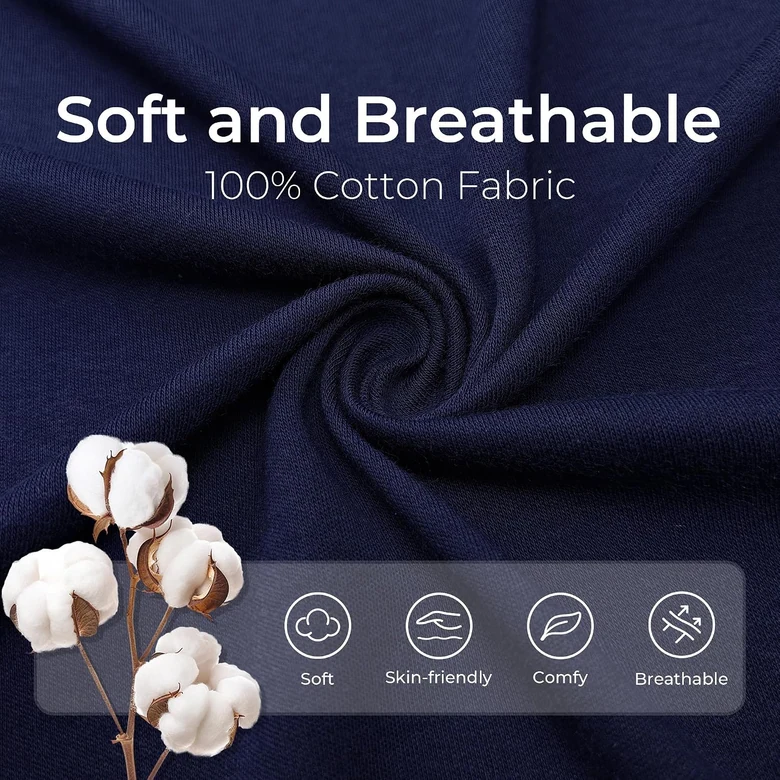
Every product page prints a fabric line when the label states one, and leaves it out when the label does not. That line is worth more than the photograph. A composition like ninety-five per cent polyester with five per cent spandex is a knit that will stretch and hold. A hundred per cent cotton is a woven that will crease and shrink a little. A polyester fleece is a warm piece that will pill.
Alongside the fabric line, the card shows the details that change the warmth without changing the fabric: 526 pages have pockets, 109 have a hood, and where a piece is part of a multipack the card says so. None of that is decoration. A hood is worth two degrees. Pockets are worth none, and people buy them anyway, including us.
The sizing guide covers how the fabric changes which size to take: sizing sleepwear you will never try on. The care guide covers what heat does to each of these fabrics in the wash: washing sleepwear so it lasts a second winter.
Static, smell and the things nobody warns you about
Three fabric behaviours never make it onto a product page anywhere, ours included, and all three decide whether somebody keeps wearing a piece.
Static. Polyester fleece generates it and cotton does not. In a dry house in January a fleece set crackles when you take it off and clings to everything. Nothing fixes it permanently. A damp cloth in the dryer helps, and so does not using fabric softener, which sounds backwards and is not: softener coats the fibre and makes the pile cling more.
Smell. Polyester holds odour where cotton releases it. A cotton set worn three nights and washed comes out neutral. A fleece set worn the same three nights needs a longer wash. This is the single most common reason people who love fleece own two sets and rotate them.
Noise. Satin and some technical knits are audible against sheets. It sounds like a trivial objection until it is three in the morning, and it is a real reason people return otherwise perfect pieces.
From the bench

Buying for a house rather than a person
Households buy sleepwear in batches, and the batch logic is different from the individual logic. If you are buying for a house rather than a person, sort by room rather than by preference: the coldest bedroom gets fleece, the warmest gets cotton, and the middle rooms get knit, whatever anybody says they like.
Then buy one robe per person regardless. A robe is the layer that lets a household with one thermostat and four opinions arrive at four different temperatures, and it is the cheapest way to do it. 139 pages here are robes and they span every weight on the site.
The mistake to avoid is buying the same fabric for everybody because it was on one page. The two ends of this catalogue are more than ten degrees apart in what they suit, and a household rarely sits at one temperature.
A year in one bedroom
What a year actually looks like in one bedroom, if it helps to see the shape of it. These are not recommendations so much as the pattern people describe when they explain what they own.
| Room temperature | What most people wear | What goes wrong at the edges |
|---|---|---|
| 76 °F and above | Sleep shorts, or a knit top on its own | Anything woven feels heavy. Fleece is unwearable |
| 70 to 76 °F | Cotton set, or knit set with the window open | Fleece is too warm even in winter |
| 64 to 70 °F | Knit set, or cotton set with a robe over it | The band where a light layer beats a heavy one |
| 58 to 64 °F | Flannel or fleece set | Cotton alone leaves you awake at four |
| Below 58 °F | Fleece set or a onesie | Two piece sets leave a gap at the waist |
The interesting row is the middle one. Between sixty-four and seventy degrees the layered answer beats the single heavy one almost every time, which is the whole argument of the previous section in one line.
Notice also that the table has nothing to do with the month. A bedroom that sits at sixty degrees in July because it faces north over a garage wants the same fabric in July as in January, and a top-floor room that never drops below seventy-four wants shorts in February.
What the fibre percentages actually predict
A fibre line is a forecast if you know how to read it. Four combinations cover almost everything in this catalogue, and each one behaves predictably.
| What the label says | What it is | How it sleeps | How it ages |
|---|---|---|---|
| 100% cotton | woven or jersey, depending on the piece | breathes, cools when damp, creases | shrinks once, then stable. Thins at the elbow over years |
| 100% polyester | almost always fleece here | traps heat, holds odour, no breathability | pills where it rubs, keeps its size |
| 95% polyester, 5% spandex | stretch knit | light, close, recovers its shape | loses a little stretch each year at the cuff |
| Cotton with a few per cent spandex | jersey knit | breathes and gives at once | the most forgiving mix on the site |
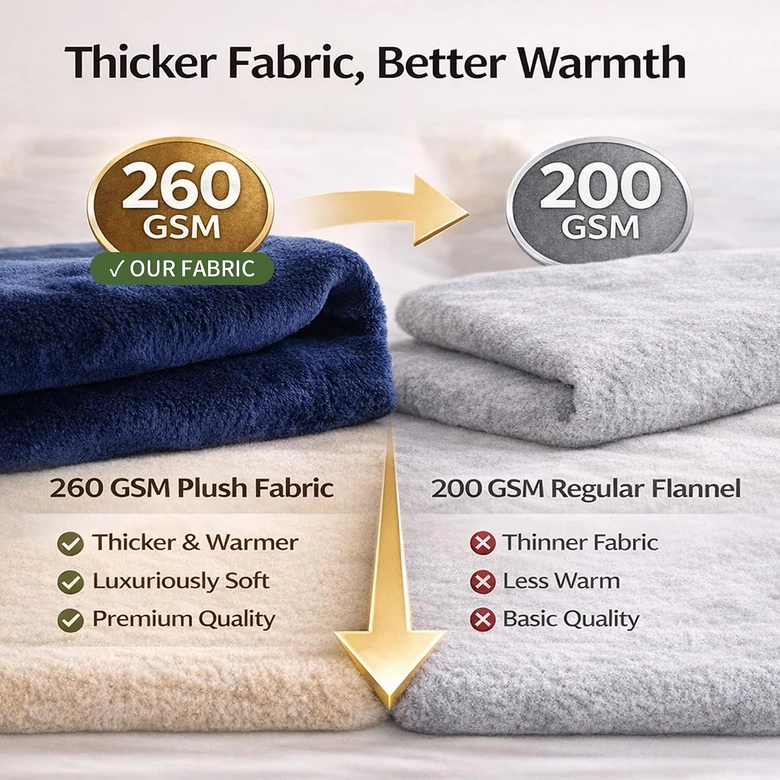
What the percentages do not tell you is weight, and weight is the missing number in this whole category. Two garments can both say a hundred per cent cotton and differ by half again in grams per square metre, which is the difference between a summer set and an autumn one. Nobody publishes that number in this market, and we do not have it either, so the fabric name on our cards is doing the job the weight would do if it existed.
Which is worth saying plainly rather than implying: when we call something lightweight, that comes from the maker's description, not from a measurement we took.
The two things a thermometer settles
Two questions in this guide are settled permanently by a twenty dollar thermometer left on a bedside table for a week, and no amount of reading substitutes for it.
The first is what your bedroom actually is. Most people guess high by three or four degrees, because the number on the hallway thermostat is not the number in a room with a window on one wall. Three degrees is the difference between two rows in the table above.
The second is how much the room moves overnight. A bedroom that starts at seventy and falls to sixty-two by four in the morning is a different problem from one that holds seventy all night: the first wants a layer you can add, the second wants a single correct weight. This is the most common reason a set feels right at bedtime and wrong at dawn, and no fabric solves it by itself.
Once you have both numbers, this entire guide collapses into one line of the table, and the sizing guide handles the rest: sizing sleepwear you will never try on.
Six shelves, sorted by warmth
The site is organised by garment because that is how people search. If it were organised by warmth instead, it would run in this order, and it is worth seeing once because it explains why some shelves feel narrow.
Coolest first. Sleep shorts are the lightest thing here: 38 pages, cotton and knit only, and no fleece at all because a fleece short solves nothing. Sleep tops come next, mostly knit, bought to pair with something you already own.
The middle. Pyjama sets span the widest range of any shelf: 161 pages running from all-cotton summer sets to fleece two-pieces for a cold house. This is the shelf where reading the fabric line matters most, because two neighbouring pages can be ten degrees apart.
Bottoms sit alongside sets in range but skew lighter, because a bottom is usually worn with a t-shirt rather than a matching top. 173 pages, and the cotton ones outnumber the fleece.
Warmest. Robes are a layer rather than a garment, so they land wherever the thing underneath does not reach. Onesies are the end of the scale: 34 pages, all fleece, all for rooms that other shelves cannot answer.
Read that order backwards and you have a buying sequence for a house that gets colder through autumn: shorts, then a knit set, then cotton with a robe, then fleece, then the onesie for the fortnight in February when the heating cannot keep up.
The narrow shelves are narrow for a reason worth stating. Sleep tops and shorts are small because most people buy them as replacements rather than as first purchases, and onesies are small because the room that needs one is uncommon. A shelf with eighteen pages is not a shelf we neglected. It is the size the question is.
From the bench
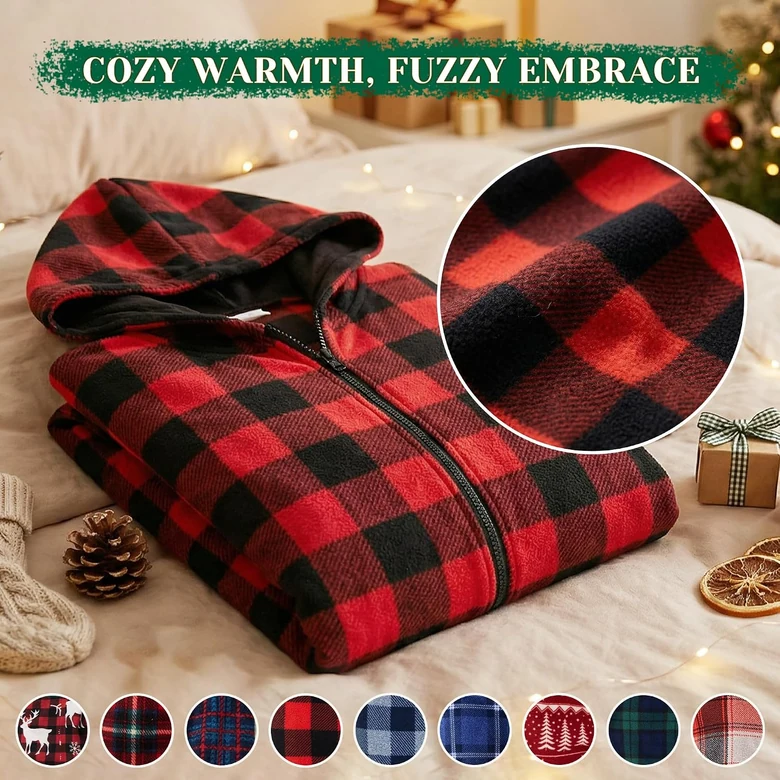
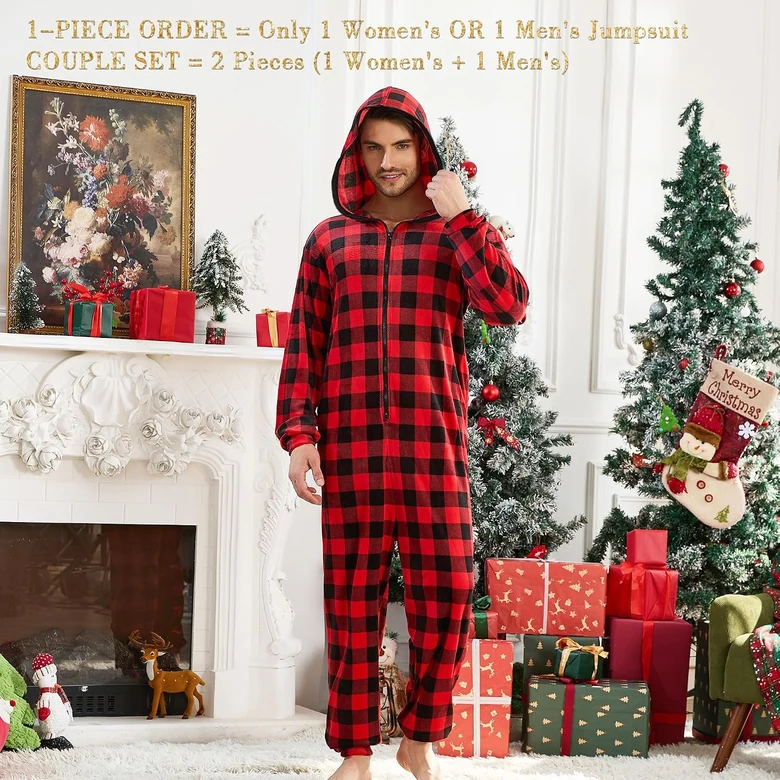
Men's Fleece Hooded Onesie, Buffalo Plaid Red
fleece · zip
4.5 out of 5 · 218 ratings




Size L only in this colour
$19.99
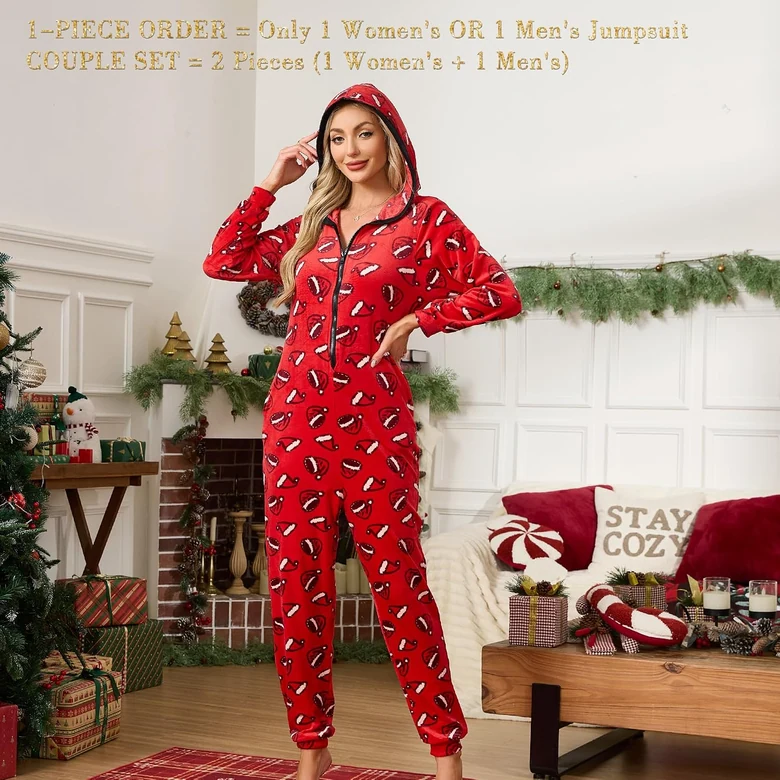
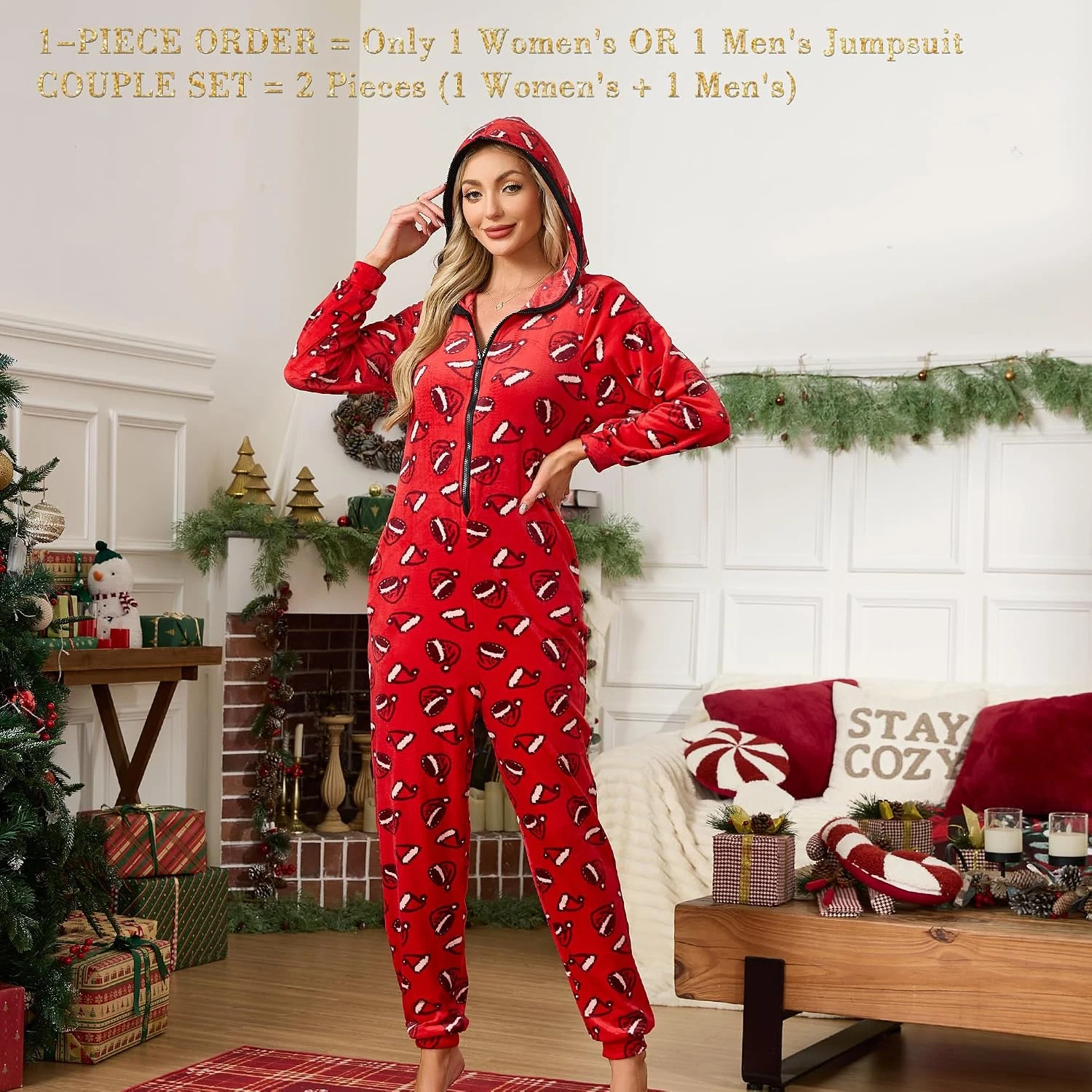
Women's Fleece Hooded Onesie II, Santa Hats Red
fleece · zip
4.5 out of 5 · 208 ratings

Size L only in this colour
$14.99
Where this advice runs out
This guide cannot tell you how warm you personally sleep, and that varies more between two people in the same bed than between two fabrics on this list. It also cannot tell you what your bedroom actually measures, which is worth twenty dollars of thermometer to find out and settles the question permanently.
And it cannot make any claim about health. Nothing here is a medical device, none of it is thermal underwear, and none of it is tested for anything beyond what the maker states. What the fabrics do is physical and predictable. What that does for your sleep is between you, your room and the two health agencies quoted above.
Sources
- Healthy sleep habits, National Heart, Lung, and Blood Institute, read 7 September 2026.
- About sleep, Centers for Disease Control and Prevention, read 7 September 2026.
Before you go
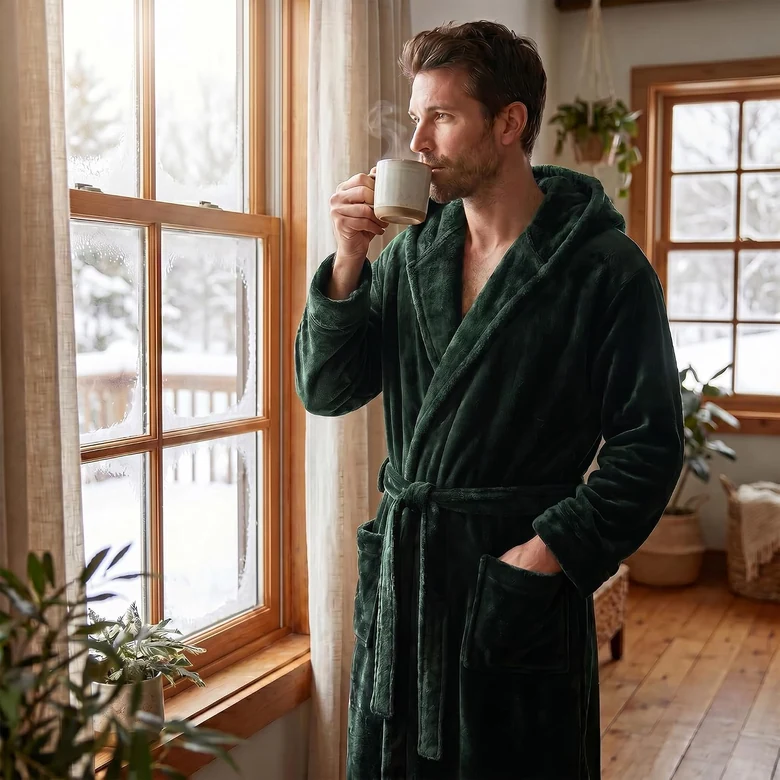
Men's Fleece Hooded Robe, Dark Green
fleece
4.6 out of 5 · 20,688 ratings
Size S/M only in this colour
$23.09
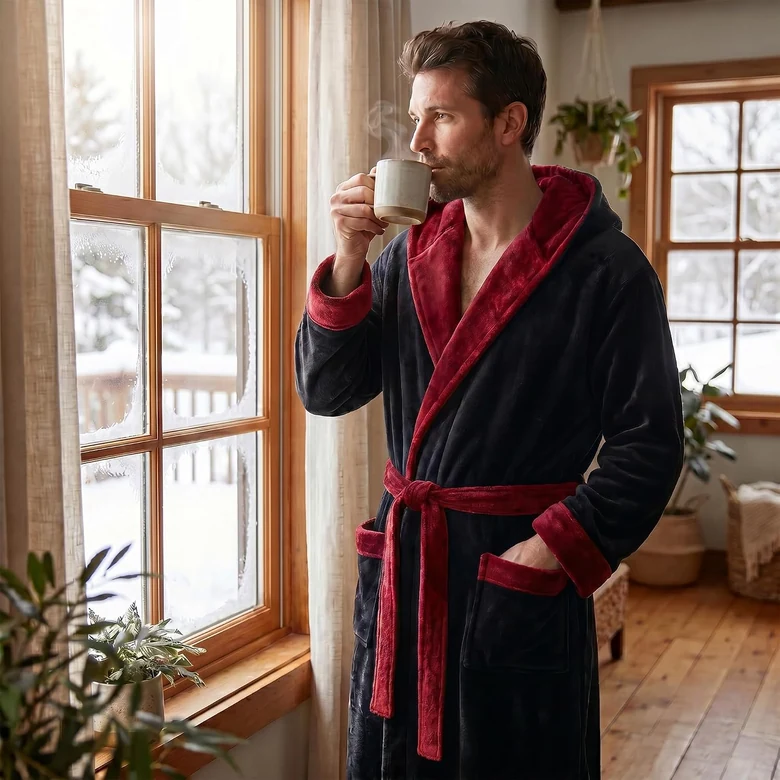
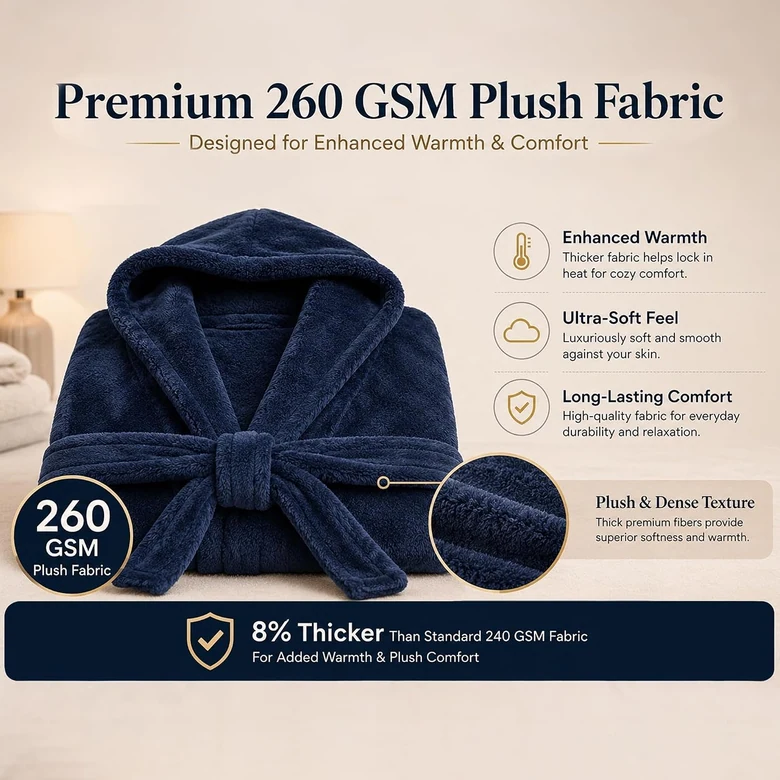
Men's Fleece Hooded Robe, Black / Dark Grey
fleece
4.6 out of 5 · 20,688 ratings
Size 2XL/3XL only in this colour
$26.72